



If tiny details like shipping cost mailers vs boxes can shift your margins this much, is it time to swap cardboard for mailer bags? You want lower costs, but you also care about product safety, customer smiles, and your impact on the planet.
Small online shops live under constant pressure to cut expenses without making orders feel cheap. It is not only about finding the absolute cheapest shipping packaging. It is about material prices, carrier fees, dimensional weight rules, packing time, storage space, and even how your parcel looks on a doorstep.
Here are some real numbers: how much poly mailers and boxes cost per unit, how they change your shipping brackets, which products belong in each type, and where hidden savings appear in your workflow. You also see options such as NOYO’s biodegradable mailers let you save money, protect products, and support your values at the same time.
“Design is not just what it looks like and feels like. Design is how it works.”
— Steve Jobs
Good packaging should work hard for your margins, your brand, and your customers all at once.
Key takeaways
The quick points below give a fast view before you dive into details.
-
Material costs add up fast. Poly mailers often cost around a quarter each, while many small boxes start near a dollar or more. At one thousand shipments, swapping safe orders from boxes to bags can mean roughly one thousand dollars saved on packaging alone.
-
Weight brackets. Lightweight mailers usually keep your packages in lower weight brackets with USPS and other carriers. Boxes add extra ounces that push you into higher poly mailer shipping rates, and flexible bags also reduce dimensional weight charges because they do not trap air.
-
Match packaging to the product. Poly mailers work best for soft, bendable, and pre-boxed goods. Fragile, rigid, or multi-item orders still belong in boxes. Forcing the wrong packaging often leads to damage and returns, which erases any savings and hurts your reviews.
-
There are “hidden” savings. Mailers cut out most tape and void fill and they pack in seconds. Over hundreds of orders, that means lower labor costs, less clutter, and more room for inventory. Breaking down the real costs: material prices and shipping fees
When you compare shipping cost poly mailers vs boxes, two big lines matter on every order:
-
what you pay for packaging
-
what carriers charge once weight and size hit their systems
A simple way to see the gap is to compare a common setup.
|
Aspect |
Mailer |
Cardboard box |
|---|---|---|
|
Typical material cost per unit |
Around 0.25 dollars in bulk |
Around 1.25 dollars or more in bulk |
|
Added packaging weight |
Often under 1 ounce |
Often 4 ounces or more |
|
Space taken in bin or truck |
Forms around product, little air space |
Fixed size with more unused air inside |
If you ship 1,000 orders a month and switch from a $1.25 box to a $0.25 mailer when it’s safe, you save about $1,000 in material costs alone.
For a small shop, that can fund ads, a part-time helper, or a small production run.
Shipping fees also play a part here.
A light cotton shirt might weigh eight ounces on its own.
In a small cardboard box, the box can add four ounces, so the carrier now sees a twelve-ounce package.
In a thin mailer, the same shirt stays close to eight ounces.
With services such as USPS First Class Package Service, staying under each ounce bracket means a lower box vs envelope shipping cost, often only a few extra cents per ounce.
UPS and FedEx also charge dimensional weight, not only the actual weight. A bulky box with empty space can cost more than the item itself. A snug mailer reduces dimensions and keeps you closer to the true weight.
One detail many sellers miss is USPS classification. If your mailer is thicker than one quarter of an inch, USPS treats it as a package rather than a flat envelope.
Marking it as a large envelope to chase lower USPS mailer rates can lead to billing adjustments and even delayed or returned mail. It is safer to enter exact dimensions and choose the package or thick envelope option so the rate matches your real parcel.
Which products belong in mailers (and which don't)
The right packaging for ecommerce shipping has to fit the product, or savings vanish into refunds and bad reviews. A simple rule helps a lot: if an item can handle bumps and pressure without breaking or creasing, it is often a good match for a mailer.
Great fits for mailers include:
-
Soft apparel: T-shirts, leggings, socks, scarves, and many lightweight garments travel safely in a layflat mailer.
-
Pre-boxed items: Shoe boxes, small electronics in sturdy retail cases, and jewelry boxes do well inside a mailer, since the inner box provides structure while the outer bag cuts weight and blocks rain.
-
Durable small goods: Items like cosmetics, phone cases, yarn, or plush toys can ship in mailers and help you reduce shipping costs from packaging choices.
Some orders still need a box no matter how tempting a lighter bag may look.
Products that usually belong in boxes:
-
Glass, ceramic, and delicate electronics that need a rigid shell and ample inner padding
-
Rigid goods with sharp corners, such as hardcover books or vinyl records, which can poke through a bag or arrive with dented edges
-
Multi-item orders that need separation with paper or compostable peanuts so items do not collide
-
Extra heavy items (coats, small appliances, multiple shoe boxes) that might stretch or tear a mailer seam
A simple system helps you sort items quickly:
-
Keep two or three NOYO mailer sizes on hand.
-
Match each product type to the smallest safe option.
-
Move anything that feels too rigid, sharp, or heavy into a box.
That way you protect your brand while still using bags wherever they make real sense.
Beyond shipping rates: hidden savings you can't ignore
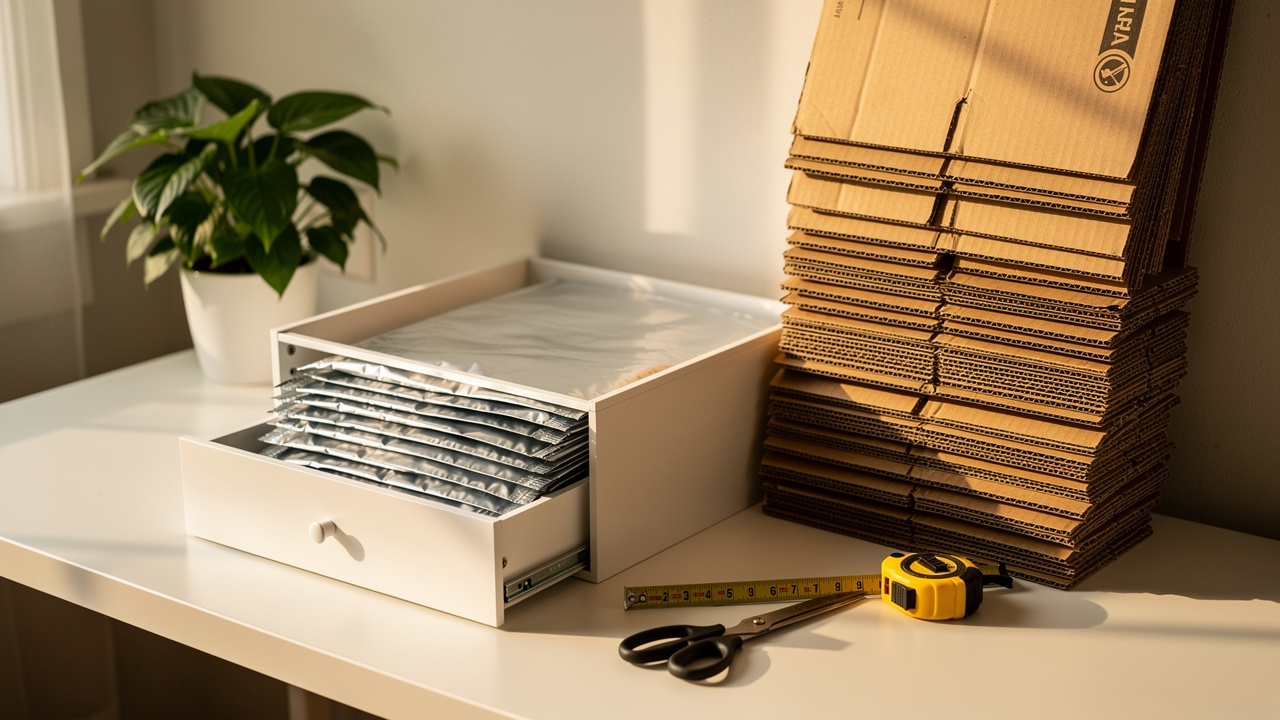
The shipping label is only the visible part of any shipping packaging cost comparison. Some mailers also trim a long list of quiet expenses that eat into your margin over time.
-
Less tape and filler. Many mailer orders need no bubble wrap, air pillows, or packing peanuts because the bag hugs the product closely. Self-adhesive strips replace rolls of tape. Each skipped strip of tape or handful of filler shaves a few cents from that order.
-
Lower storage needs. Flat-packed boxes still pile up in closets and along walls. One stack of one hundred mailers fits in a drawer, while the same count of boxes can fill several shelves. Less storage pressure means a tidier work area and more space for products that actually earn revenue.
-
Faster packing. Building a box, taping the bottom, adding inner wrap, and sealing the top takes many small steps. Slipping an item into a mailer and pressing the flap closed takes a few seconds and no tools. Faster packing means more orders per hour and less stress when sales spike.
-
Fewer damaged parcels. Durable mailers keep moisture and dirt away better than plain cardboard. A bag that shrugs off a rain shower prevents soggy garments and ruined print work. Fewer damaged parcels mean fewer reships, less customer service time, and less money spent making things right.
“People do not buy goods and services. They buy relations, stories and magic.”
— Seth Godin
Well-chosen packaging helps you tell that story while keeping costs under control.
The bottom line
When you look closely at shipping cost mailers vs boxes, the numbers stack up pretty fast. A mailer that costs about 0.25 dollars instead of a 1.25 dollar box can save around one thousand dollars per month at one thousand shipments.
On top of that, lighter, slimmer parcels often qualify for cheaper weight-based rates, skip many dimensional weight penalties, and avoid fees that come from moving air.
A simple audit of your last few weeks of orders can show where mailers would work. Mark every product that is soft, bendable, or already boxed, try bags on a slice of those shipments, and track postage, supply usage, and return rates. As results come in, you can scale up what works.
NOYO’s line of biodegradable and pre-designed mailers, plus glassine bags and gummed tape, makes it easy to test and grow a packaging mix that protects your margins, delights your buyers, and respects the planet with every order that leaves your door.
FAQs
Question 1: Are mailers really cheaper than boxes for all shipping services?
Poly mailers are almost always cheaper on the material side, since each bag costs far less than a small box. They also cut weight, which often lowers poly bag shipping prices with services that charge by ounces or pounds. The biggest gains appear with light items using USPS First Class, ground services, or similar options. For very heavy items or flat rate services where weight does not change the price, a box can be just as cost effective, so you should always compare exact carrier quotes.
Question 2: Will USPS charge me more if I classify my mailer wrong?
Yes, misclassifying your mailer can lead to extra charges. USPS treats any parcel over one quarter of an inch thick as a package or thick envelope, not as a flat. If you mark a thicker mailer as a large envelope to chase lower USPS poly mailer rates, USPS can adjust the postage and bill you or your buyer later. Entering accurate dimensions and picking the package or thick envelope option helps you avoid delays, returns, and surprise fees.
Question 3: Can I ship fragile items in bubble-lined poly mailers?
Bubble-lined mailers work well for semi delicate items such as small cosmetics, paperbacks, or sturdy jewelry pieces. The built-in bubble layer softens knocks during travel and can replace a small box for many medium-risk goods. However, items that can crack, shatter, or bend easily still belong in a rigid box with proper inner padding. If you would be upset to drop the product from waist height onto a hard floor, treat it as box-only.
Question 4: Do eco-friendly poly mailers cost more than standard ones?
Prices for 100 percent recycled mailers now sit close to standard plastic mailers, especially when bought in bulk as part of your regular shipping supplies for small business. Biodegradable options such as NOYO’s eco mailers may carry a small price bump, but they also support a strong green brand story. Many shoppers happily support sellers that choose planet-conscious packaging for ecommerce shipping. Over time, higher loyalty and repeat purchases can more than balance any slight increase in unit cost.


