



You've poured your heart into creating beautiful products, and the last thing you want is for your packaging to harm the planet your customers care about. That's where compostable mailer bags come in. These innovative shipping solutions let you protect your products while staying true to your values. But not all compostable options are created equal, and understanding what makes them truly eco-friendly can feel overwhelming. Let's break it down together so you can make the best choice for your small shop.
What Makes a Mailer Bag Actually Compostable
True compostability means more than just breaking down eventually. It means your packaging transforms into nutrient-rich soil without leaving harmful residues behind.
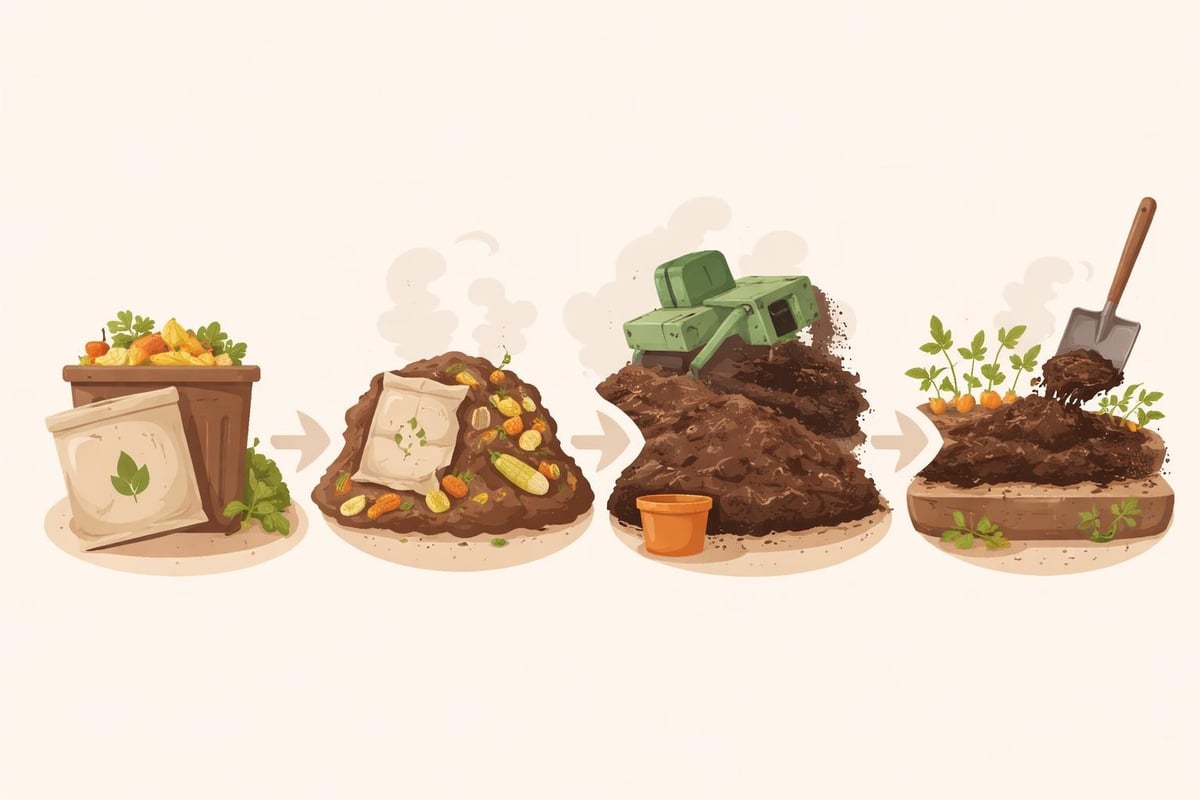
Compostable mailer bags are typically made from plant-based materials like cornstarch, cassava, or other renewable resources. These materials are designed to decompose completely in commercial composting facilities within 90 to 180 days. Unlike traditional plastic, which fragments into microplastics, properly certified compostable materials don't emit harmful substances during decomposition.
The Science Behind the Break Down
When exposed to the right conditions (moisture, oxygen, and microorganisms), these bags break down at the molecular level. The process turns them into carbon dioxide, water, and biomass. This is fundamentally different from biodegradable plastics, which might break into smaller pieces but don't truly disappear.
Key decomposition requirements include:
- Temperature between 55-60°C (typical in commercial composting)
- Adequate moisture levels
- Presence of microorganisms
- Proper oxygen flow
Understanding certifications like BPI and FSC helps you verify whether your packaging meets legitimate compostability standards rather than just marketing claims.
Choosing the Right Compostable Mailers for Your Products
Not every compostable bag works for every type of product. Matching your packaging to your items ensures both protection and sustainability.
Think about what you're shipping. Delicate jewelry needs different protection than sturdy ceramic mugs. While compostable mailers excel in many scenarios, they do have limitations compared to traditional poly mailers.
| Feature | Compostable Mailers | Traditional Poly Mailers |
|---|---|---|
| Water Resistance | Moderate (shorter duration) | High (extended protection) |
| Tear Resistance | Good for most items | Excellent |
| Temperature Sensitivity | More sensitive | Very stable |
| Environmental Impact | Minimal with proper disposal | Significant long-term pollution |
Many small shop owners find that biodegradable mailer bags work beautifully for clothing, textiles, and non-fragile items. For items needing extra cushioning, consider padded options that still maintain eco-friendly credentials.
Sizing Matters More Than You Think
Choosing the right size reduces waste and shipping costs. Too large, and you're paying for empty space. Too small, and you risk damage.
Popular sizes and their ideal uses:
- 6x9 inches: Small jewelry, accessories, samples
- 10x13 inches: Folded clothing, small books, cosmetics
- 14.5x19 inches: Larger garments, multiple items
- 19x24 inches: Bulk orders, thick sweaters, home goods
The mailer bag calculator takes the guesswork out of selecting dimensions for your specific products.
Navigating Certifications and Compliance
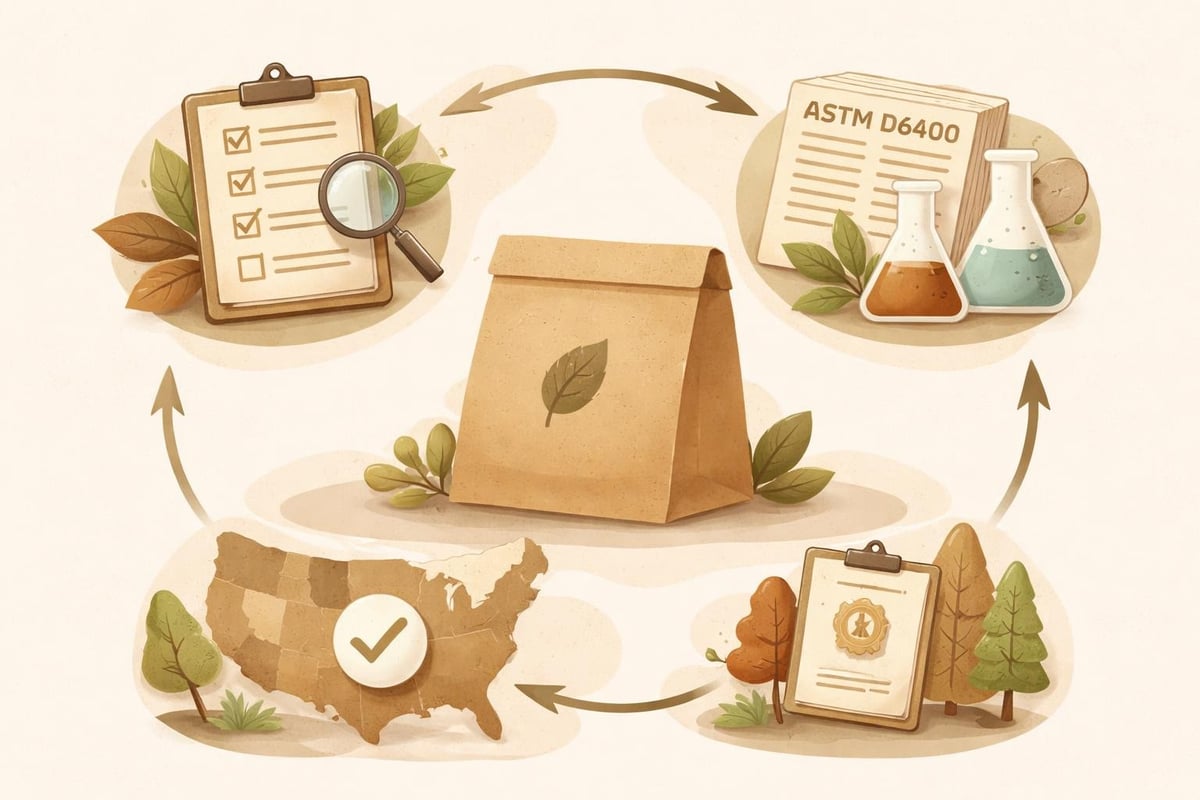
With greenwashing rampant in the packaging industry, legitimate certifications are your best friend. They prove your compostable mailer bags actually deliver on their environmental promises.
The BPI (Biodegradable Products Institute) certification is the gold standard in North America. Products bearing this mark have been independently tested to meet ASTM D6400 standards for compostability. This means they'll break down in commercial composting facilities without leaving toxic residue.
Another important consideration is FSC certification for plant-based materials, ensuring the source materials come from responsibly managed forests. You can learn more about these standards on Impack's certifications page.
State Regulations You Should Know About
California's AB 1201 law sets strict requirements for products labeled as compostable. If you ship to California, your packaging must meet multiple certification standards, not just one.
Understanding plastic bag bans across different states helps you stay ahead of regulatory changes that might affect your packaging choices in the future.
Educating Your Customers About Proper Disposal
Here's the tough truth: even the best compostable mailer bags won't help the environment if customers don't dispose of them correctly. Your role in education makes all the difference.
Most compostable mailers need commercial composting facilities to break down properly. Home compost piles rarely reach the necessary temperatures. This means your customers need to know where their local composting options are.
Include clear disposal instructions:
- Print disposal guidelines directly on the mailer
- Add a small insert card with composting information
- Link to disposal resources on your website
- Mention local composting programs when possible
Some makers worry about the extra communication burden, but customers who choose eco-conscious businesses genuinely appreciate the guidance. They want to do the right thing and just need clear direction.
Making It Easy for Customers
Create a simple one-sheet guide explaining what compostable means, where to find local composting facilities, and what happens if composting isn't available. Including this in orders shows you care beyond the sale.
This comprehensive guide to compostable mailers offers detailed information you can share with customers who want to learn more about the decomposition process and environmental benefits.
Real-World Considerations for Small Shops
Let's talk about the practical side, because sustainability needs to work with your business realities, not against them.
Compostable mailer bags typically cost more than traditional plastic mailers. For many small shops, this represents a meaningful expense. However, the premium often pays off through customer loyalty and alignment with brand values. Customers shopping with eco-conscious makers often expect and appreciate sustainable packaging.
Budget-friendly approaches include:
- Starting with compostable bags for your most popular items
- Ordering in bulk to reduce per-unit costs
- Exploring outlet options for discounted sustainable packaging
- Gradually transitioning your entire inventory
Storage is another consideration. Compostable materials can be more sensitive to humidity and temperature than traditional plastics. Keep them in a cool, dry place and avoid storing them for extended periods before use.
Beyond the Bag: Complete Sustainable Packaging
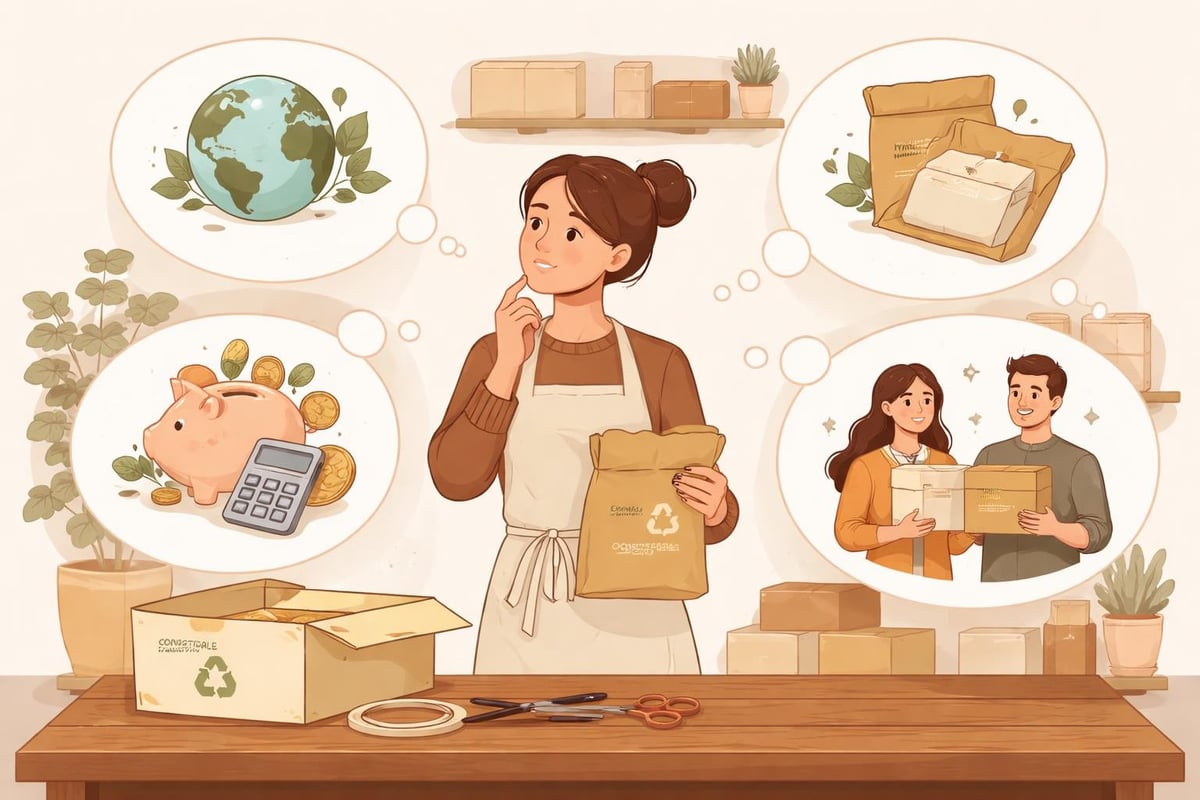
Your mailer is just one piece of the packaging puzzle. Creating a fully sustainable unboxing experience means thinking about every element.
Pair your compostable mailer bags with eco-friendly packing materials. Avoid bubble wrap and foam peanuts. Instead, consider recycled paper fill, corrugated wraps, or even natural materials like dried leaves for rustic brands.
Don't forget about your packing tape. Many small shops invest in compostable mailers only to seal them with plastic tape. Paper tape with natural adhesive completes your sustainable approach.
Building Your Eco-Friendly Supply Kit
Creating a cohesive sustainable packaging system doesn't happen overnight. Start with the basics and expand as your budget allows.
- Switch to compostable mailers first
- Add paper-based tape and labels
- Replace plastic padding with paper alternatives
- Source sustainable thank-you cards and inserts
- Consider reusable packaging for local customers
Browse through Impack's full collection to see how different sustainable options work together for a complete packaging solution that protects your products and the planet.
Switching to compostable mailer bags represents a meaningful step toward reducing your environmental footprint while maintaining the quality your customers expect. By understanding certifications, choosing the right materials, and educating your buyers about proper disposal, you create packaging that truly aligns with your values. Impack offers a carefully curated selection of biodegradable mailers and sustainable packaging supplies designed specifically for small shops like yours, with free shipping across the contiguous US and Canada to help you make the transition as smooth as possible.


